Fed Pauses Rate Cuts as Economy Shows Resilience, Inflation Lingers
- investment33
- Jan 29
- 5 min read
By John Ian Lau
The Federal Reserve hit the pause button on its easing cycle Wednesday, holding the benchmark federal funds rate steady at 3.5%-3.75% after three consecutive quarter-point cuts since September. The decision reflects a shift in the balance of risks, with policymakers viewing the economy as more stable and inflation pressures as persistent, even as growth accelerates.
In its post-meeting statement, the Federal Open Market Committee (FOMC) noted that “available indicators suggest that economic activity has been expanding at a solid pace.” Job gains have remained low, but the unemployment rate “has shown some signs of stabilization.” Inflation, however, “remains somewhat elevated,” a nod to recent data showing consumer prices still running above the Fed’s 2% target.
The move marks a departure from the prior statement’s emphasis on downside risks to employment. Now, the committee judges' risks to its dual mandate of maximum employment and price stability as “balanced.” Uncertainty about the economic outlook “remains elevated,” the FOMC added, signaling a data-dependent approach to future adjustments.
Key Economic Indicators in Focus
Recent data underscores the Fed’s cautious stance. Third-quarter 2025 gross domestic product expanded at a robust 4.3% annualized rate, driven by consumer spending growth of 3.5%, according to the Bureau of Economic Analysis. The Atlanta Fed’s GDPNow tracker estimates fourth-quarter growth at 5.4%, far exceeding the long-term trend of around 2%.
On the labor front, the unemployment rate stood at 4.4% in December 2025, down slightly from recent highs but still elevated compared to pre-pandemic levels. Nonfarm payrolls added just 55,000 jobs in December, below expectations and a slowdown from the 200,000-plus monthly gains seen earlier in 2024. Core personal consumption expenditures (PCE) inflation—the Fed’s preferred gauge—eased to 2.1% year-over-year by year-end estimates, but headline CPI held at 2.7%, with core at 2.6%, per the Bureau of Labor Statistics.
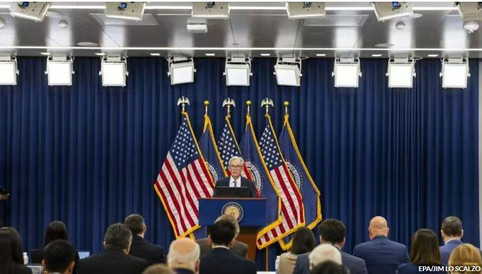
Fed Chair Jerome Powell, in his press conference, described the economy as entering 2026 on a “firm footing,” with labor market indicators pointing to stabilization rather than deterioration. He attributed much of the recent inflation overshoot to tariff-related goods price increases, which the Fed expects to peak and ease. “The current stance of monetary policy is appropriate and supportive,” Powell said, emphasizing that future decisions would be made “meeting by meeting” based on incoming data.
A House Divided: Dissent and Leadership Uncertainty
The decision wasn’t unanimous. Governors Stephen I. Miran and Christopher J. Waller—both Trump appointees—dissented, favoring a quarter-point cut. This highlights internal divisions, with some members pushing for more easing amid softening job growth. Meanwhile, Austan D. Goolsbee and Jeffrey R. Schmid expressed preferences for no change, underscoring the committee’s lack of consensus.
Powell’s tenure adds another layer of intrigue. With only two meetings left before his term ends in May, the chair faces external pressures, including a Department of Justice subpoena over office renovations and a Supreme Court case on the president’s authority to fire Fed governors. Prediction markets are betting on BlackRock’s Rick Rieder as his successor, with Treasury Secretary Scott Bessent hinting at an announcement soon. Other frontrunners include economist Kevin Warsh, Fed Governor Christopher Waller, and White House economic adviser Kevin Hassett, though Trump has suggested keeping Hassett in his current role.
But what might Trump do once Powell departs? The president, who has long criticized Powell for keeping rates too high, could appoint a more dovish chair to accelerate rate cuts and potentially resume quantitative easing, aiming to weaken the dollar and spur growth. Trump allies have floated plans to give the White House a greater say in monetary policy, including regular consultations on interest rates. With potential vacancies—such as if Powell resigns his governorship early or the Supreme Court allows the removal of Governor Lisa Cook—Trump could stack the board with up to three new appointees, tilting the FOMC toward looser policy. This could mark a shift toward less Fed independence, prioritizing economic stimulus amid $38 trillion in national debt and broader global liabilities exceeding $600 trillion.
Investment Banks Weigh In
Wall Street’s take on the pause is mixed, with many seeing it as a prudent response to resilient growth but warning of risks ahead.
J.P. Morgan economists, led by chief U.S. economist Michael Feroli, had anticipated the hold, noting the “recent stabilization in the unemployment rate should finally bring some cohesion to the FOMC.” They expect the Fed to remain on hold through 2026, keeping rates at 3.5%-3.75%, as “the economy seems to have settled into an equilibrium of slower labor supply growth met by slower labor demand growth.”
Goldman Sachs forecasts U.S. GDP to expand 2.5% in 2026 (fourth quarter over fourth quarter), outperforming the consensus of 2.1%. Their economists see core PCE inflation falling to 2.1% by December, 0.3 percentage point below consensus, but caution that “the starting point for job growth is weak and narrow,” with the unemployment rate stabilizing at 4.5%.
Morgan Stanley’s chief economic strategist Ellen Zentner described the decision as arriving “in a somewhat hawkish package,” despite the hold. “We expect the economy to grow at a solid pace next year, but it must be accompanied by job gains. The next round of jobs data may point to the exact opposite.”
At Vanguard, senior economist Andrew Patterson expects strong capital investment, particularly in AI-related expenditures, to drive GDP growth above 2% in 2026, with the unemployment rate settling around 4.2%. “Core inflation peaking at just over 3% before moderating,” he said, but warned of distortions in shelter costs due to data collection issues from government shutdowns.
Charles Schwab’s fixed-income strategist Kathy Jones noted the statement’s upbeat tone on the economy, leaving “the door open to rate cuts later this year.” Allianz Investment Management’s Charlie Ripley called it “détente at the Fed for now,” adding that “labor conditions are not worsening, growth has accelerated and inflation has steadied for now. Policy rates are much closer to neutral.”
How Investors Should Prepare
With the Fed signaling a prolonged pause amid sticky inflation and potential leadership upheaval, investors are advised to adopt a cautious yet opportunistic stance. Reuters reports bond investors bracing for an extended hold, edging into slightly riskier trades like corporate credit, buoyed by fiscal stimulus and consumer resilience, though high valuations warrant selectivity. AInvest recommends balancing AI-driven tech and industrial stocks with defensive sectors such as utilities and healthcare, while in fixed income, strategies like bond laddering and focusing on intermediate-term Treasuries can mitigate rate normalization risks.
Raymond James suggests preparing for just one rate cut in 2026, emphasizing diversified portfolios that capitalize on sturdy growth—tracking at 5.4% for Q4 via Atlanta Fed’s GDPNow—while monitoring noisy data from shutdowns. Seeking Alpha highlights fiscal policy as a dominant driver, with potential QE resumption supporting risk assets and real estate but warns of fading liquidity momentum increasing volatility. For banks like JPMorgan and Goldman, higher net interest margins could benefit, but rate-sensitive areas like real estate (e.g., Prologis) and tech (e.g., Apple) face headwinds if the pause extends. Overall, prioritize resilience: trim overvalued growth bets, build cash buffers for volatility from Fed transitions, and lean into sectors poised for tariff-driven or AI-fueled expansion.
Market Reaction and Outlook
Markets took the pause in stride, with the S&P 500 edging near records at around 6,978 and the Nasdaq up 0.9% post-decision. Bond yields held firm, with the 10-year Treasury around 4.2%, reflecting term premium and supply dynamics rather than growth fears.
Looking ahead, the big question is who takes the wheel next at the Fed. With political pressures mounting and inflation sticky, the pause could extend into mid-2026 unless data softens markedly. As Powell put it, monetary policy is “not on a preset course.” For now, the Fed’s independence is under the microscope like never before, testing its ability to navigate an uncertain landscape.