JIL’s Take on AI: Kung Fu Robots Herald China’s Fire Horse Leap in AI
- investment33
- Feb 17
- 3 min read
By John Ian Lau
Kung Hei Fat Choi!
As we gallop into the Lunar Year of the Horse, may prosperity and innovation charge forth like a spirited stallion.
In the I Ching, the Year of the Fire Horse—spanning February 17, 2026, to February 5, 2027—embodies radiant volatility and unrestrained energy. The heavenly stem “Bing” (丙) aligns with the sun’s bold fire, paired with the earthly branch “Wu” (午) for Horse, amplifying themes of expansion, ambition, and technological disruption. This isn’t mere astrology; it’s a cultural lens through which China views progress, favoring bold innovators who harness chaos for breakthroughs. As astrologer Donna Stellhorn notes, “Horse energy is fast energy, and this is a Fire Horse—the fastest of the five Horse signs. Technology moves fast, innovation moves fast.”
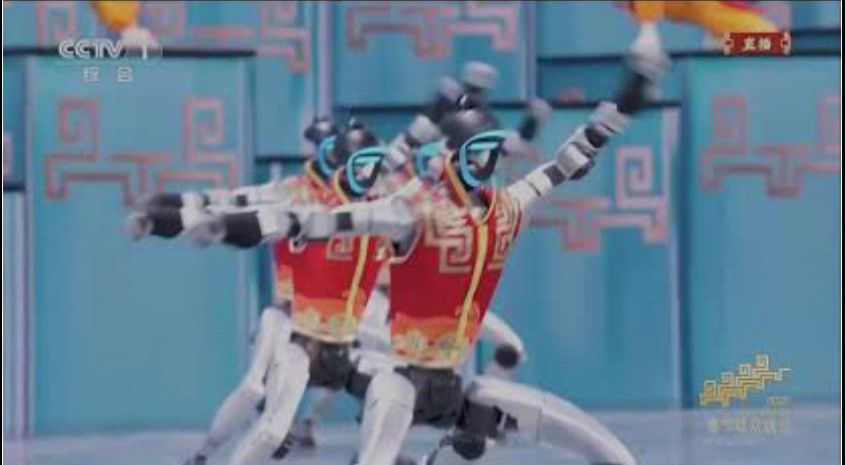
No spectacle captured this spirit more vividly than the 2026 Spring Festival Gala on February 16, where humanoid robots stole the show in a mind-blowing kung fu performance. Broadcast on CCTV to an audience rivaling the Super Bowl—over a billion viewers worldwide—the event featured dozens of Unitree Robotics’ G1 and H2 models executing intricate martial arts routines alongside young performers. Dressed in traditional garb, the bots wielded staffs, swords, nunchucks, and poles in synchronized “Drunken Fist” sequences, complete with rapid position changes, high-speed running at up to 4 meters per second, and trampoline somersaults reaching 3 meters high. This marked the world’s first fully autonomous humanoid robot cluster kung fu display, setting multiple global records without wires or CGI—all live on national TV.
The progress is staggering. Just a year ago, in the 2025 Gala, Unitree’s bots twirled handkerchiefs in a simple yangko dance. Now, they’ve graduated to weapon-wielding warriors, showcasing fluid joint articulation and dynamic balance that rivals human athletes. Other Chinese firms like Noetix, MagicLab, and Galbot joined the fray, with models selling out on JD.com within minutes—two Galbot G1 units at nearly 630,000 yuan ($91,190) snapped up instantly. 1 Unitree CEO Wang Xingxing told 36Kr the company aims to ship 10,000 to 20,000 units in 2026, up from 5,500 last year, potentially capturing a chunk of the tens of thousands in global humanoid shipments.
Commentators are buzzing. “What an amazing achievement. So human-like movements,” said one YouTube viewer. On Reddit, users noted limitations like unsolved hand dexterity but praised the onboard AI. Industry observers, however, temper the hype: Reliability, production scale, and costs remain hurdles for factory deployment, keeping bots in the “comfort zone” of stages for now. As Tao Mingyang of Global Times put it, the Gala “showcased China’s tech leap in just one year.”
This echoes my earlier piece on The Greatest Good (TGG), the Asian private investment firm that’s reported by local financial media of designating $200 million into AI-driven robotics ventures. TGG’s foray underscores China’s red-hot market in embodied AI—not just a vast supply chain derided by some as “another factory floor,” but fueled by cutting-edge research and big-money bets. With partnerships across EMEA and South Asia, TGG affirms that hyperscale growth in precision robotics is inevitable, driven by domestic innovation hubs and global capital.
Stacking China against the US highlights the divide. Beijing’s ecosystem shipped 10 times more humanoid robots in 2025, with 21 of 38 CES 2026 exhibitors hailing from China.
Patents tell the tale: 7,705 Chinese filings versus 1,561 US ones over five years. 19 Firms like Unitree and AgiBot lead in mass production—16,000 units sold globally in 2025, mostly Chinese—while US players like Tesla’s Optimus lag, with sales not expected until 2027.
China’s advantages? Government backing, resilient supply chains, and lower prices. The US counters with superior AI models and data security, but as one analyst quipped, “If U.S. robots were better, why so many Chinese ones flexing at CES?” Yet China’s 150+ humanoid firms signal a potential bubble, per its own planners.
In this Fire Horse year, the Gala isn’t just entertainment—it’s a harbinger. With robots mastering kung fu today, imagine a Robots Olympics tomorrow: bots from Beijing battling Boston Dynamics in backflips and balance beams. Who wins gold? The nation that iterates fastest. China’s already at full gallop.